
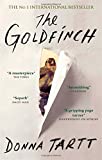
Book of the Month: The Goldfinch by Donna Tartt (2013)
Critical Evaluation
“It is dangerous to write openings as compelling as Donna Tartt’s. In The Secret History, the one-page prologue gives us a murder and a narrator who has helped to commit it. The Little Friend starts with the death of a child who, by page 15, is found hanging by a piece of rope from a tree branch, his red hair “the only thing about him that was the right colour any more”. And now, in The Goldfinch, Tartt has a 50‑page two-part opening. In the first section, the narrator, Theo Decker, is holed up in an Amsterdam hotel, looking at newspapers written in Dutch, which he can’t understand; he is searching for his name in articles illustrated with pictures of police cars and crime scene tapes. Before any of this is explained, the story moves back 14 years to the day Theo’s mother dies, when he is on the cusp of adolescence. Her death takes place in New York’s Metropolitan Museum, as a consequence of an exploding bomb – mother and son are in separate rooms when the bomb blast occurs, and the descriptions of Theo regaining consciousness in the wreckage, and trying to find his way out of the ripped-apart museum before returning home, expecting to find his mother there, are written in astonishingly gripping prose. This is, of course, where the danger comes in: if, at the end of the kind of set piece to which the word “climactic” should emphatically apply, you still have 700 pages to go, aren’t you setting your readers up for disappointment?
“Astonishingly, the answer is no.”
Shamsie, Kamila. “The Goldfinch by Donna Tartt – review” The Guardian. 17 October, 2013.
First Excerpt
“While I was still in Amsterdam, I dreamed about my mother for the first time in years. I’d been shut up in my hotel for more than a week, afraid to telephone anybody or go out; and my heart scrambled and floundered at even the most innocent noises: elevator bell, rattle of the minibar cart, even church clocks tolling the hour, de Westertoren, Krijtberg, a dark edge to the clangor, an inwrought fairy-tale sense of doom. By day I sat on the foot of the bed straining to puzzle out the Dutch-language news on television (which was hopeless, since I knew not a word of Dutch) and when I gave up, I sat by the window staring out at the canal with my camel’s-hair coat thrown over my clothes—for I’d left New York in a hurry and the things I’d brought weren’t warm enough, even indoors.
“Outside, all was activity and cheer. It was Christmas, lights twinkling on the canal bridges at night; red-cheeked dames en heren, scarves flying in the icy wind, clattered down the cobblestones with Christmas trees lashed to the backs of their bicycles. In the afternoons, an amateur band played Christmas carols that hung tinny and fragile in the winter air.”
Second Excerpt
 “‘Jeez, wouldn’t you know it,’ said my mother. ‘It’s about to pour.’ Leaning over the street, looking north: no cabs.
“I caught her hand again. ‘Come on,’ I said, ‘we’ll have better luck on the other side.’
“Impatiently we waited for the last few blinks on the Don’t Walk sign. Bits of paper were whirling in the air and tumbling down the street. ‘Hey, there’s a cab,’ I said, looking up Fifth; and just as I said it a businessman ran to the curb with his hand up, and the light popped off.
“Across the street, artists ran to cover their paintings with plastic. The coffee vendor was pulling down the shutters on his cart. We hurried across and just as we made it to the other side, a fat drop of rain splashed on my cheek. Sporadic brown circles—widely spaced, big as dimes—began to pop up on the pavement.
“‘Oh, drat!‘ cried my mother. She fumbled in her bag for her umbrella—which was scarcely big enough for one person, let alone two.
“And then it came down, cold sweeps of rain blowing in sideways, broad gusts tumbling in the treetops and flapping in the awnings across the street. My mother was struggling to get the cranky little umbrella up, without much success. People on the street and in the park were holding newspapers and briefcases over their heads, scurrying up the stairs to the portico of the museum, which was the only place on the street to get out of the rain. And there was something festive and happy about the two of us, hurrying up the steps beneath the flimsy candy-striped umbrella, quick quick quick, for all the world as if we were escaping something terrible instead of running right into it.”